Showing posts with label police. Show all posts

Tuesday, 20 October 2020

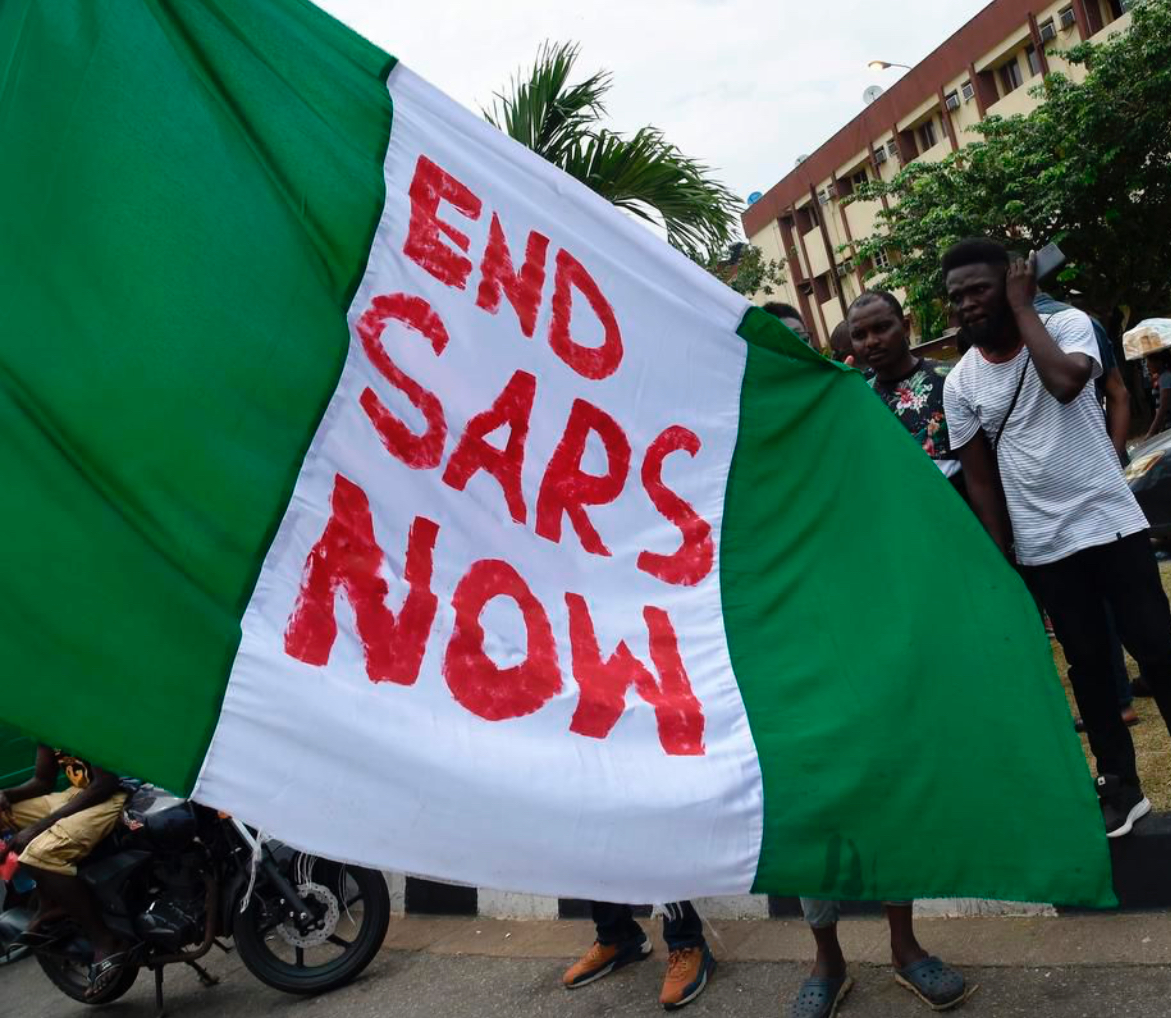
Time to Deconstruct Policing in Nigeria

© The Star

Law enforcement brutality in Nigeria has a long history predating independence. Britain used armed forces to violently quell any local resistance to the imposition of colonial rule. And during colonial rule local police forces were extremely repressive in dealing with uncooperative and non compliant disenfranchised citizens. Tragically, since independence the country has failed to redress the oppressive history of law enforcement that it had inherited. Years of military rule and unrestrained armed robbery have entrenched a culture of repression and brutality in law enforcement. 

The Nigerian Police Force has a well earned reputation for being undertrained, underpaid and under managed. The force is notorious for corruption, extortion and extra judicial killings. It has absolutely no capability for maintaining law and order, or detecting crime. Its sole function has been to selectively respond to already committed crimes or crimes in progress. The only protection the police force offers is to government officials, banks and the wealthy. 

The atrocities committed by the Special Anti-Robbery Squad (SARS) are a reflection of the corrupted state of Nigerian law enforcement; and disdain for the lives and wellbeing of ordinary citizens that successive governments have demonstrated. Nigerians are suffering brutality and murder at the hands of police officers, soldiers, secret service agents, prison officials and road marshals. There is absolutely nowhere that they can turn to seek redress or reprieve. The governments feeble attempt to rebrand SARS as a new Special Weapons and Tactics (SWAT) Team shows how disinterested and out of touch it is.

Seismic changes are needed in law enforcement in Nigeria in order to reform the police. The emphasis has to be taken away from guarding the elite to tackling crime in a strategic and comprehensive manner. Critical to that will be disarming the rank and file police officers. Police officers should be trained in community policing and protecting the Nigerian populace. They need to learn how to carry out their duties unarmed and in a sensitive manner. This is what will give them the authority to effectively police the streets. Armed squads should be used in response to identified threats of armed attacks by criminals. Retraining in detecting crime will go some way to taking guns off, and improving safety on the streets. 

There is no possibility of reforming the Nigeria Police Force without completely reorganising, or possibly removing the entire senior officer corps currently at the helm. Every senior officer should be evaluated and assessed for honesty, competence and commitment. All those who fail the evaluation should be forced to resign or face being dismissed. All existing members of the police force should undergo a programme of development and retraining. The police force should be subject to new a governance framework with an independent board responsible for regulation and executive management at the helm. 

Of course, none of this would be possible unless there is a ruling government committed to anti-corruption, equity, transparency and reform. But then I guess it would also help to not have a prison system that is decrepit and inhumane, a judiciary that is full of negligent sellouts, a legislature populated by corrupt parasites; and political parties run by self serving immoral shysters. This government’s inept handling of the ‘End SARS’ protests shows that it is neither committed to nor capable of looking out for the welfare of the people or country of Nigeria.  

Wednesday, 20 February 2019

London Policing Twenty Years on from the Macpherson Report

It has been twenty years since the Macpherson Report into the London Metropolitan Police handling of the racist murder of Stephen Lawrence. Doreen Lawrence, Stephen's mother' has suggested that gains in the aftermath of the Macpherson Inquiry report have not been built upon. However, Cressida Dick, the Commissioner of the Metropolitan Police, claims that the Met has made great progress and come a long way.

Since the Macpherson Inquiry there has been the Tottenham Riots in 2011 following the police shooting to death of Mark Duggan. The riots subsequently spread to the rest of London and nationwide. There was the shooting of Azelle Rodney in 2005. Rodney was shot to death by a police marksman while in a car with two associates. An inquiry later found the shooting unlawful. There was the shooting to death of John Charles de Menezes in 2005 following the July 7 terror attack. He was shot in a case of mistaken identity and the Commissioner of the Metropolitan Police was later found guilty and fined for a failure of duty of care. In 2008 Sean Rigg died in police custody as a result of being restrained by police officers. Olaseni Lewis died on a mental health ward following prolonged restraint by police officers. Dalian Atkinson, an ex England international footballer, died in 2016 after being tasered by police officers whilst in mental health crisis. In 2017 Edson da Costa died after he subdued by CS gas following a car stop by police. In 2017 Rashan Charles died after being restrained by a police officer who suspected him of swallowing a contraband substance.

In 2017/2018 twenty three people died in police custody or following police interventions. This was the highest figure recorded in ten years.

In the consideration of where the Metropolitan Police is twenty years after Macpherson there has been a lot of talk about how much the proportion of officers from minority ethnic groups has increased (from 3% to 14%). There has also been mention of race awareness and community engagement training being carried out. The suggestion is that it is now a different police force. However, is it a better police force in regards to its strategic approach to police minorities, or managing minority police officers?

It is possible that structures and image awareness in the Met has changed but have attitudes moved on all that much? People from minority groups are still having negative experiences of policing in London on a daily basis. And a lot of police officers still see Black people as threatening, and likely to offend. Senior police officers are less likely to show any confidence or offer insightful guidance when dealing with cases involving people from minority ethnic groups. It is unclear whether the progression of minority ethnic officers in the force has significantly improved; or whether minority ethnic officers generally feel well supported, free from prejudice, and empowered in their jobs.

While some things have changed since Macpherson it is clear that the Metropolitan Police really cannot beat its chest about how well it has done in managing issues of race in minority ethnic communities or police officers. There is in no doubt that it could do more and do better. The real issue is how much does the Met itself know that that is the case.


Monday, 19 November 2018

Minority Policing

One major disappointment I had with Obama's tenure as president of the United States was the fact that he did not do anything concrete to address police procedures in regards to dealing with minorities or reverse the increasing militarisation of the police force and law and order mentality. The culture of suspicion and profiling of minorities can't be resolved overnight but more could have been done to address the establishment tolerance for the use of lethal force against unarmed minorities.

The recent case in Chicago of the police shooting dead a heroic Black security guard who had foiled an attempted armed assault yet again raises issues about how the police are conditioned to respond to Black people. This wasn't even a case of mistaken identity. The police didn't see the assailant they were there to apprehend they just saw someone who they assumed was an assailant for no  reason other than his skin colour. This is further illustrated by the case of the police officer who shot a man in his own home and claimed she mistook him for an intruder after mistaking his apartment for hers!

There have been recent suggestions in the UK for the police to be allowed to require a lower standard of suspicion to conduct 'stop and search' checks. This is mainly targeted at tackling knife crime amongst young Black men. The supposition here is that it would be legitimate to stop almost any Black man because there is a reasonable chance that he may be armed with a knife. This ignores the fact that the proportion of Black men involved knife crime is probably too small to even add up to a whole number. The Met's inability to develop intelligence networks within minority communities is a reflection of how they relate to such communities. It also might be an unintended consequence of how the Met treats such intelligence sources when they do come forward. This sort of oppressive approach to tackling demographic groups is exactly what happens in totalitarian and fascist states.

ⒸGorrellart.com
Undoubtedly there are some good police officers and some excellent examples of community policing but there is a toxic culture in law enforcement when it comes to the perception of minority groups. This includes how they treat members of the public and fellow police officers from minority groups.

A radical and drastic programme of reform is desperately needed not only to address institutional racism in law enforcement but also to redress a culture of fear and apprehension in the perception of and attitudes adopted towards minority groups. At some point it needs to be instilled in law enforcement that there are no circumstances in which excessive force is an appropriate response when dealing with unarmed and defenceless people from minority groups. It certainly isn't a way to serve or protect them. It can only lead to alienation which creates a vicious circle of fear, overreaction and tragic consequences.

Friday, 8 July 2016

Living In Fear

One of the benefits of the evolution of society was that human beings no longer had to live a brutish and short existence. They could form relationships, acquire property and provide for themselves without having to endure an unending cycle of attacks and killings. In other words, they were free to live without fear. It appears that modern day America is recreating the conditions that prevailed in prehistoric societies in Black communities. People are preyed upon by bullies and criminals, and oppressed and brutalised by the so called agents of law and order. We now have a situation where the police's failure to protect and serve the Black people in America has now placed the lives of all people in America in peril. 

The perpetrators of the shootings in Dallas are wrong and have done more harm than they can imagine. Killing police officers under the cover of a 'Black Lives Matter' march was inexcusable. However, the police in America have created an environment where any Black person must reasonably fear for their lives if stopped by the police. The escalation of police shootings of unarmed Black men combined with increased instances of Black people dying in custody hasn't yet led to any systemic change in law enforcement in America. If the establishment continues to disregard unjust killings and abuse of authority by the police then they are setting the scene for Black people to stand their ground and start fighting back. 

I deplore the shooting of police officers in Dallas but my sympathies lie with the families of Alton Sterling, Philando Castille and the five hundred other Black people who have died at the hands of the police this year.