Showing posts with label corruption. Show all posts

Monday, 30 January 2023

Nigerian Nexus: Hope or Horror

Since independence Nigeria has suffered ravaging and regression at the hands of successive regimes. The government of the first republic was overthrown by the military plunging the country into a spiral of political mismanagement, acculturated corruption and tribal conflict. With the end of military rule the second republic was bedevilled by excess and corruption. Another military coup led to a period of tyranny and widespread fraudulence by military leadership. A much anticipated transition to civilian rule finally occurred and the third republic has been a catalogue economic and social failings by one government after another. 

The 2023 elections in Nigeria will represent yet another opportunity to halt the damage and division visited upon the country by past and present political and military leadership. It will not see the reversal of all harm done by the sheer scale of the corruption, indifference and incompetence that has marked national government to date. The capacity for leaders to work solely for themselves or not at all has been breathtaking. Thanks to the their singularly unpatriotic and sterling apathetic efforts what was once a thriving nation with great potential is now performing at below any standard baseline in almost all aspects of social mobility. The country is not even close to being in a position to achieve any of its Sustainable Development Goals. 

Nigeria’s economy, political system, law enforcement and internal security are currently in a mess. The current government has floundered and watched things get progressively worse. Unfortunately the current crop of politicians are unlikely to have the will or integrity to get to grips with addressing all these problems. Peter Obi of the Labour Party of Nigeria is the one notable presidential candidate who is not completely tainted by the stench of ineptitude and corruption, however there are questions about the people he has surrounding him and his methods. Whether he will get the chance to prove his mettle remains to be seen. 

In February Nigerians will have the opportunity to take a stand and send a message or deal a decisive blow against corrupt and self serving politicians. Whether that opportunity is seized or not may say all there needs to be said about the prospects of Nigeria as a country and a credible nation. 

Sunday, 17 July 2022

The Original Armed Robbers in Nigeria are the Military


Nigeria’s independence in 1960 involved a precarious truce between North, East and South Protectorates that had been put in place by British colonialists. In order to emerge as a unified country the politicians needed time to come together and start to act with a common purpose. The route to shared ideals proved uncertain and uneasy. Corruption and tribal tensions provided the excuses for a bloody and brutal military coup. The military brought with it authoritarian rule, elitism, executive entropy, conspicuous consumption and regional quotas. 

The military subjected Nigeria to another coup within months of overthrowing the civilian government in 1966; and then straight into a civil war in 1967. The military government never had a vision for developing an independent nation and instead focused on placating dissatisfied elements in the military and asserting control over the country. They set about establishing a bureaucracy that reflected military sensibilities. Its leadership was determined by status and entitlement, without very much regard for competence or commitment. 

The military government appointed military officers to head all government agencies. The only qualification required was military rank. They set about a programme of random capital development and resource allocation which paid little consideration to strategic need or social and economic infrastructure. What followed was the introduction of a culture of cronyism, graft and financial misappropriation. They focused on taking full advantage of the newly discovered petroleum reserves to initiate vanity projects and reward themselves with a luxurious lifestyle. 

Instead of exploring the full range of resources available in oil exploration, investing in agriculture, public sewage system, diversifying energy production, and expanding the transportation network the military focused on building roads and bridges in urban areas where they could avail themselves of the many official vehicles they had issued to themselves. There was no strategy to promote small or medium business or develop fiscal facilities to develop commercial ventures and entrepreneurship. 

The period following the discovery of oil became notable for a child like keenness to use the wealth. White elephants were proposed, started and subsequently abandoned or under-utilised. There included two steel plants, multiple refuse disposal facilities and petroleum refineries in Northern Nigeria. In 1972 the Udoji Commission was set up to look at reforming the civil service and improving terms and conditions of staff. However, it turned into a giveaway bonanza with people being given cash handouts, pay increases and brand new official vehicles. Basic level staff got a nominal amount but senior officials received considerably greater benefits. 

Despite the lucrative petroleum exploitation Nigeria fell into a minor recession in 1978/1979, eventually leading to having to implement the IMF Structural Adjustment Programme in 1986. This led to a currency devaluation, rocketing food prices and higher import tariffs. In 1977 Nigeria's national debt rose by an estimated 110%. Power generation was so poorly managed there were frequent power cuts all through the 1970s, and many rural areas still do not have electricty.

A lot of retired military officers have been at the heart of the civilian political kleptocracy that has ravaged Nigeria to the point of destitution. The military is one of the best funded organisations in the country but its budgets have been subject to rampant misuse and misappropriation. The current president, an ex military ruler, has presided over an unfathomable period of decline. He has also been incredibly ineffective and unprogressive. Olusegun Obasanjo who is held up as an example of a leader who got things done, presided over the destruction of postal and telephone services in the country. He introduced cellular services but that has been a largely unregulated money grab by providers. The National Health Insurance Service he set up only provides limited healthcare for a small minority of citizens.

Nigeria's current problems seem insurmountable and the military, and ex military officers are historically and currently at the heart of all that is wrong in Nigeria. Just to halt all the damage done a new political order and system is needed. All the current politicians need to be banned and a new constitution needs to be written. The government apparatus needs to be slimmed down to halt waste and inefficiency and resources directed to building agricultural and manufacturing infrastructure. The sole reliance on petroleum revenue has been Nigeria's downfall. The economy needs to be diversified and more prominence given to productivity. That is the real way to reduce unemployment and reduce poverty and wealth inequity.

Saturday, 25 June 2022

Harvesting Organs and Futures


The case of a Nigerian senator who has been arrested and charged in the UK with trafficking a person with intent to harvest body parts has reverberated across U.K. and Nigerian newsrooms and social media. It appears to be a gruesome instance of abuse of power and exploitation of a vulnerable and deprived person. There are claims the senator enticed the victim with promises of a better life in the U.K. but secretly planned to use him as an organ donor for the senator’s unwell daughter. A different claim is that the victim was being paid to come to the U.K. as donor but was not a match and has made the accusations to avoid being sent back to Nigeria. It is possible that one, or even both of these accounts are true but we will find out in due course. 

Nigeria actually has a murky history of abductions and organ harvesting. Of recent there have been unconfirmed reports of wealthy people engaging criminal gangs to abduct, murder and harvest organs for their use. However, Nigeria’s history of this goes back to ancient times predating colonialism. Certain tribes were known to abduct people to be used in sacrifices or ritualistic offerings to gods. These practices were outlawed and phased out with the coming of colonialism and Christianity. However, there have continued to be cases and allegations of people killed, or body parts harvested as part of wealth rituals. These murderous and inhumane practices appear to be living on in a different guise  

Poverty has reached extreme levels in Nigeria. It is estimated that approximately seventy percent of the population live below the breadline. Not only are people chronically impoverished but they receive absolutely no direct support from the government by way of welfare or social benefits. Under these circumstances it is very likely that a considerable number of people would be coerced into making organ donations for payment. It is tragic that the very people responsible for raiding public coffers and neglecting public services are the same ones likely to be the beneficiaries and instigators of crimes involving organ harvesting.

As a result of mismanagement and corruption by current and successive governments and legislators in Nigeria healthcare in the country is worse than it was thirty years ago. The current Nigerian president is notorious for frequently traveling abroad to seek healthcare during his tenure. A lot of Nigerians often travel to countries like India or Turkey for critical healthcare. Nigeria is not on course to achieve any of its Sustainable Development health goals; and the WHO estimate life expectancy amongst Nigerians to be around fifty years. Less than ten percent of the national budget is spent on health. Health facilities are rundown and most rural areas have almost no access to proper healthcare. Healthcare in Nigeria is a regional lottery subject to political whim. The richest with the lower needs get the most and best healthcare while the poorest with the greatest needs get little or nothing. The NHIS is a programme that reinforces inequality and does nothing to provide access to universal healthcare.

It’s indicative of the collapse of government, political, judicial, law enforcement and health systems in Nigeria that it has taken an arrest abroad to bring these matters to the surface. It is still unlikely that very much will be done to address it. However, we are reaching the point where we can’t keep covering our nakedness with sacking and cry out hope. Our very present and futures are being harvested right before our eyes. The rot has set in and it may be too late to stop it.


Sunday, 6 June 2021

How do you solve a problem like Nigeria?


It is incredible that the current Nigerian government that is widely seen as ineffective and unpopular fails to see the benefits of social media in promoting reform and recovery. In Africa in particular, having a vibrant social media is one way to sustain economic and social development. It does appear that the current government has been mulling over ways to curb the use of social media in the country and Twitter deleting a tweet by the president has given it the excuse to take action. Unfortunately, this seems to be a shortsighted and ill conceived move. 

The Nigerian government may claim to be taking action against Twitter but it’s its own citizenry that it is actually disadvantaging. If the government was unhappy about Twitter’s moderating of content it posted then it should have engaged with Twitter to resolve whatever misunderstanding of its communication and motives it might have deemed to have occurred. Depriving people of using the platform seems like the exact type of overreaction one would expect from a dictatorial and totalitarian government. Certainly it isn’t consistent with the actions and spirit of a modern democracy. 

In spite this being the 21st century Nigeria is still driven by an extremely traditional and deeply conservative culture. In personal interaction age and social status limit the nature and style of communication between individuals. With the growing pervasiveness of the internet and social media some sections of Nigerian society believe the open access has undermined their entitlement and ability to control and restrict the way communication flows between people and institutions. Rather than see the freedom as an opportunity for development for a people who are mired in poverty and deprivation; they consider it as a swamp that festers with disrespect and allows equality. Truth be told, some people in Nigeria do not like to be held accountable and balk at any suggestion of being subjected to scrutiny.

Given Nigeria’s dire economic circumstances the government has been out begging for loans and grants to maintain its revenue requirements. This type of repressive government behaviour is unlikely to be seen as promoting an environment that bodes well for external investment. In fact, the facility to profit from corruption seems to be one of the key factors currently driving consideration of investing in Nigeria. The amount of effort the government is putting into policing Twitter seems significantly greater than what it has done to curb internal insecurity issues. 

It has become clear that until Nigeria starts having honest politicians it will not have good political leadership. After sixty years of independence the country does not have functional institutions that will ensure sustainable economic and social development. The country is becoming increasingly fractured along tribal lines. Unfortunately, there isn’t the leadership to unite and heal all the divisions. If the current government could focus on internal security that at least would be something that everyone could benefit from. 

Monday, 30 November 2020

Tackling Nigeria’s Corruption: A Paradigm Shift

© Vanguard Nigeria 

Nigeria has a culture of probing corruption, especially after a leadership change. Given the endemic nature of fraudulence in the country pledging to investigate fraud and corruption is always well received. One would have thought that given the country’s long history of corruption in all facets of society there would be more focus on actually stopping and preventing corruption. An archaic bureaucracy, embedded nepotism and cronyism, and a laughable law enforcement framework make corruption almost inevitable. The system needs to change and the people need to understand the value and benefit of that change. The change needs to come in the form of a new framework of accountability that will underpin every aspect of Nigerian professional life.

There has been a lot of angst surrounding Nigeria’s predilection for tone deafness and regressive behaviour. The description ‘failing nation’ is probably an understatement of the nature of the country’s catastrophic and continuing decline. The almost total absence of effective and purposeful governing and governance in the country is shameful. However, as momentous as that is Nigeria is not alone globally in enduring trial by poor leadership. This does not excuse the country but it makes it less of a focus for me at this time. I am more concerned about weak political nucleus of the country, and the total lack of an economic, social and developmental plan for the future. No matter who gets into power there is no evidence anywhere of any political aspiration beyond just being able to exploit being in power. 

A first consideration would be to review all public and political officer salary structures. This would include a review of legislators wages and expenses. Salaries should be indexed to cost of living and competency standards. Any benefits should be based on basic housing, transport and subsistence allowances. Anything above that should be claimed for and subject to approval and authorisation by a transparent and audited process.  

All public sector commissioning and contracting should be subject to a new standards and accountability framework. There should be fit person and fit organisation standards that ensure that all prospective providers are evaluated for probity and capacity. There should be a two year audit cycle for contracts that ensures that they are performing at the required level and on target to deliver contracted outcomes. 

The oil, finance, telecommunications and private education sectors should be subject to a special interim taxation or levy to raise funds to finance a new programme of public investment in health, education, transportation and agriculture. Public consultation should be undertaken to identify and agree the areas for investment. A public commission should be appointed to administer the process and its operation should be open and report publicly quarterly. All its records should be publicly available for information and scrutiny. 

Instead of continually probing corruption Nigeria needs to reduce the opportunities within the system to defraud public finances; and increase the potential for most citizens to earn a living wage and enjoy a better quality of life. Looking for corruption in a corrupt system is just folly. Just probing corruption and punishing the guilty does nothing to address the causes of corruption. Also, it doesn’t highlight any real lessons to be learnt. The culture and systems that foster corruption need to change. Improving living conditions across the country, and reforming public management systems would be significant steps in the right direction. 

Tuesday, 20 October 2020

Time to Deconstruct Policing in Nigeria

© The Star

Law enforcement brutality in Nigeria has a long history predating independence. Britain used armed forces to violently quell any local resistance to the imposition of colonial rule. And during colonial rule local police forces were extremely repressive in dealing with uncooperative and non compliant disenfranchised citizens. Tragically, since independence the country has failed to redress the oppressive history of law enforcement that it had inherited. Years of military rule and unrestrained armed robbery have entrenched a culture of repression and brutality in law enforcement. 

The Nigerian Police Force has a well earned reputation for being undertrained, underpaid and under managed. The force is notorious for corruption, extortion and extra judicial killings. It has absolutely no capability for maintaining law and order, or detecting crime. Its sole function has been to selectively respond to already committed crimes or crimes in progress. The only protection the police force offers is to government officials, banks and the wealthy. 

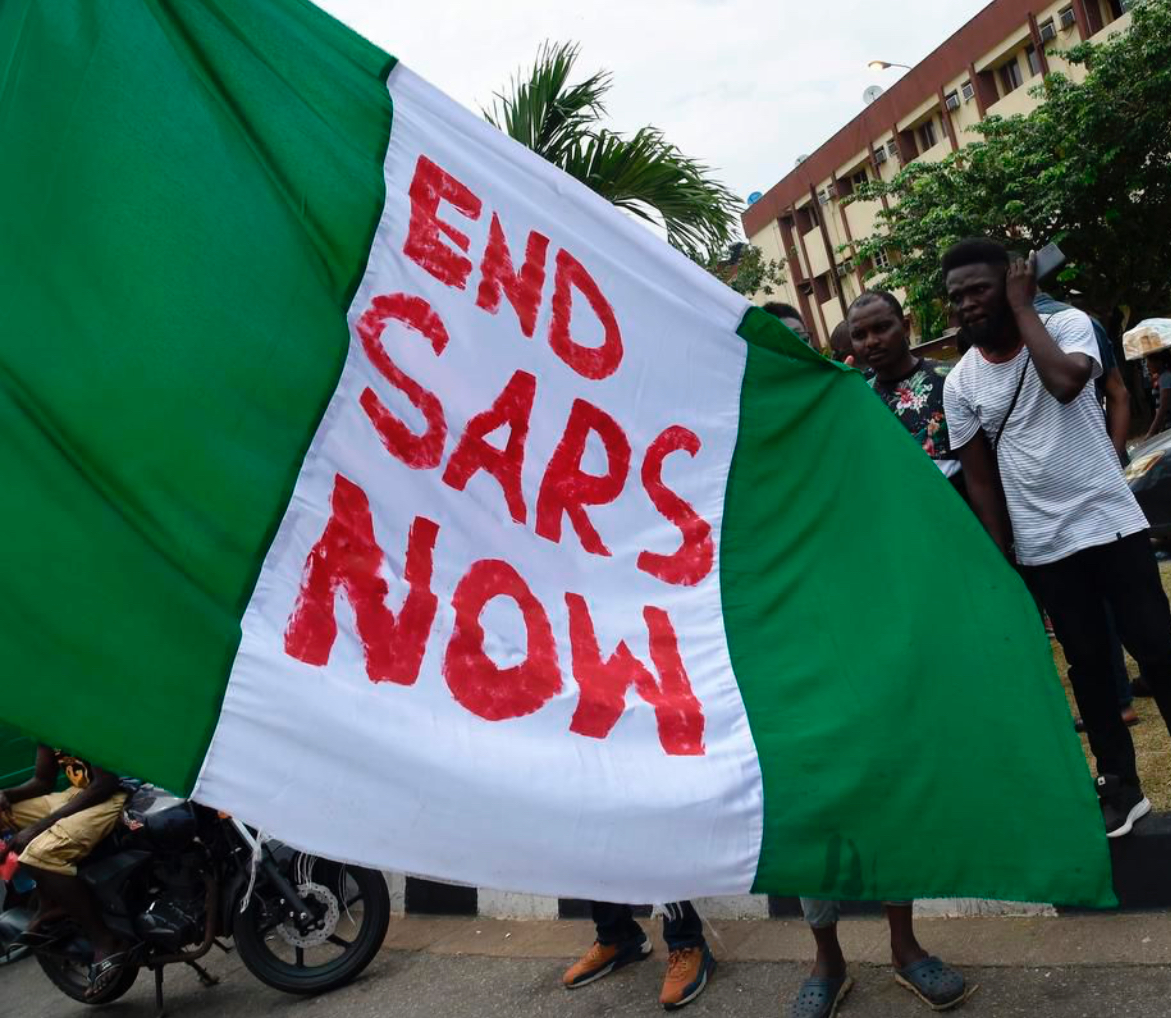
The atrocities committed by the Special Anti-Robbery Squad (SARS) are a reflection of the corrupted state of Nigerian law enforcement; and disdain for the lives and wellbeing of ordinary citizens that successive governments have demonstrated. Nigerians are suffering brutality and murder at the hands of police officers, soldiers, secret service agents, prison officials and road marshals. There is absolutely nowhere that they can turn to seek redress or reprieve. The governments feeble attempt to rebrand SARS as a new Special Weapons and Tactics (SWAT) Team shows how disinterested and out of touch it is.

Seismic changes are needed in law enforcement in Nigeria in order to reform the police. The emphasis has to be taken away from guarding the elite to tackling crime in a strategic and comprehensive manner. Critical to that will be disarming the rank and file police officers. Police officers should be trained in community policing and protecting the Nigerian populace. They need to learn how to carry out their duties unarmed and in a sensitive manner. This is what will give them the authority to effectively police the streets. Armed squads should be used in response to identified threats of armed attacks by criminals. Retraining in detecting crime will go some way to taking guns off, and improving safety on the streets. 

There is no possibility of reforming the Nigeria Police Force without completely reorganising, or possibly removing the entire senior officer corps currently at the helm. Every senior officer should be evaluated and assessed for honesty, competence and commitment. All those who fail the evaluation should be forced to resign or face being dismissed. All existing members of the police force should undergo a programme of development and retraining. The police force should be subject to new a governance framework with an independent board responsible for regulation and executive management at the helm. 

Of course, none of this would be possible unless there is a ruling government committed to anti-corruption, equity, transparency and reform. But then I guess it would also help to not have a prison system that is decrepit and inhumane, a judiciary that is full of negligent sellouts, a legislature populated by corrupt parasites; and political parties run by self serving immoral shysters. This government’s inept handling of the ‘End SARS’ protests shows that it is neither committed to nor capable of looking out for the welfare of the people or country of Nigeria.  

Friday, 26 April 2019

Yo Johannesburg, Why So Sour?!

I have only been in Johannesburg for a little over a week; and it has already provoked some mixed feelings in me so far. I recognise that South Africa is a massive country covering a huge geographical area, and with a rich diversity indigenous and migrant ethnicities. However, the latent hostility I have observed coming off people in Joburg is nothing short of saddening.

It’s understandable that concerns about safety and security might make people cautious and wary. However, as a Black African visiting the city walking the streets feels like running a gauntlet. There just appears to be a distinct lack of consideration and care for others mixed in with the cautiousness that dogs people’s every step. People might instinctively sense a foreign presence and feel a degree of  suspicion. But a person going about his business innocuously shouldn’t come across as threatening.

A friend mentioned the fact that the wave of xenophobia spreading across South Africa makes for a less than pleasant atmosphere at times. There have been reports of incidents of immigrants from other African countries being threatened and attacked. Unfortunately it does not appear that these are just isolated instances of some brewing bitterness between nationalities. I am Nigerian and so may be considered an understandable target. However, it wouldn’t be apparent on seeing me walking down the street what nationality I am. I know I am Nigerian but the cold stares and shoulders I observe don’t really seem to make any distinction.

Another explanation might be that the South African psyche bruised and battered through the apartheid era hasn’t healed yet and still isn’t healing now. The decades since the dismantling of apartheid haven’t heralded a golden era social development. The combination of political spoils sharing and a reluctance to implement comprehensive social welfare reform has left parts of the population experiencing extremes of deprivation and social exclusion. The recent flooding in the KwaZulu-Natal Province has demonstrated that local government has been equally as ineffective as the national government in taking care of those people most in need.

South Africa has been plagued by the continuing spread of AIDS and HIV, poverty, violent crime, alcohol and substance misuse, and mental illness. While these are not typical of just South Africa the country’s approach to tackling these problems will be seen by some as abandoning the ideals of equality and social justice of all that were so dearly fought for during the apartheid era. There is definitely a need for a stronger push for social welfare and healthcare reform in the country. This should be supported by a national mental health strategy that not only starts to tackle the mental scars of the past and present, but also focuses on equipping the children and youth with the skills and resilience needed to ensure better emotional wellbeing as they go through life.

While social problems are not unique to South Africa there is a lot more the government could be doing to tackle them. The noncommittal approach to making life better for all only serves to entrench both the feelings and experience of inequality. Economic development without social security will only lead to social dysfunction and disorder. Something needs to be done to put a smile on the faces of South Africans. Let’s hope the politicians decide to make that a priority.

Tuesday, 29 May 2018

Nigeria Born Again

copyright: Asukwo eb
Since the return of party politics in Nigeria following the demise of military dictator Sanni Abacha the country has made some considerable strides. The economy is considered one of the key emerging economies in the developing world. There has been widespread access to mobile communications and internet services. Business magnate Aliko Dangote is considered the richest man in Africa. However social conditions have deteriorated. Poverty, unemployment and deprivation are rife. Wealth inequality has gotten worse. Corruption continues unchecked.

A lot of hope has been vested in incoming governments to curb corruption and neglect; and get development back on track. To date no government has been able to deliver on its promises. The current government under Buhari promised to fight corruption, instability and deprivation. It is widely acknowledged that it has failed to do this to any appreciable extent. However, Buhari has expressed an intention to stand for election to a second term as president. There has been a lot of debate on whether based on his performance he can be considered a worthy candidate. It is almost certain his party will support his candidacy but he himself has not distinguished himself as a saviour with the vision or will to bring about change in the country.

It’s incredible that in 2018 Nigerians are still hoping for an election campaign based on integrity, social and economic vision, and an honest manifesto; instead of cash distribution combined with thug driven violence. We still don’t have candidates who can give a good account of their past stewardship. Campaigns are rife with false claims, empty promises and personal abuse. The electorate deserves better and needs to hold political aspirants to a higher standard. The only way change will happen is if a new cadre of politicians is ushered in. The country desperately needs people with a passion for public service who are not driven by a desire for personal enrichment.

Nigeria is currently beset by extensive poverty, a lopsided economy, inadequate rural investment, wide ranging unemployment, unchecked crime and regional violence, poor access to healthcare, erratic power supply, decline in quality of education, mass emigration, and inadequate public services. Any politician not talking about these issues over the next year cannot possibly have very much to offer. Any campaigns that are not centred around offering solutions to these problems would only be trying to pull the wool over our eyes. Any chance of a better future will depend on the electorate demanding a better class of politician; and asserting their rights to have a political system that serves the nation as a whole.


Wednesday, 28 June 2017

Changing Nigeria's Political Landscape

copyright: Micha Klootwijk
Politics in Nigeria is corrupt and unevolved. It is riven by mismanagement and tribal partisanship. There is a strong belief that it is unlikely to see a change for the better anytime soon. It is difficult to argue with that. Even the current crop of up and coming political aspirants are steeped in the lazy and uninspired principles of their forebears. Unfortunately entering into politics is driven by a desire that accumulate wealth or escape poverty rather than a vocation for selfless public service. This has created a status quo of corruption and incompetence in both the executive and administrative arms of government.

It is time for a new vanguard of socially conscious Nigerians to create a new narrative that both connects with the aspirations of Nigerians and addresses their most pressing needs. In order to do this there needs to be a profile created for public service. Capability and integrity have to take precedence over wealth and patronage. Public can no longer be seen as a passport to personal wealth.

Successive governments have failed to address security issues with regards extremists and crime and disorder. Public services only serve to entrench deprivation and inequality. Economic policy has been regressive. There is little appetite for investment in sustainable development. Economic regulation is inadequate and poorly enforced. The north east remains isolated, unsafe and underdeveloped. The south remains an environmental disaster zone exploited by oil companies and local militias.

An association of young people supported but not led by some like minded older and wiser hands need to come together to form a viable political party. Nobody with present or past affiliations with political parties or groups in the country should be eligible to take up membership. This new party would campaign on a platform of good governance, transparency, financial accountability, economic development, youth empowerment and open society. This new political movement will start small and look to grow its membership and relevance on a local and national basis. It will seek to develop a solid support base and promote its political values across all states. It would hopefully be able to build this up into a credible national presence.

It is time to reimagine Nigeria as a place where there is strength in diversity. Where unity can be achieved through fairness and unselfish patriotism. A place where social capital is built up, maintained and reinvested in national development. A place where elders are role models and mentors to the youth. A place where young people grow up with a sense of integrity and an aspiration to personal and public improvement.

Thursday, 27 April 2017

Starvation in Africa: The New Face of Imperialism

Image courtesy: Project Authenticity
The United Nations has indicated that there are almost 10 million people at risk of starvation in Nigeria, South Sudan and Somalia. In a continent that is well provided for in resources and potential this is calamitous state of events in the 21st century. It would come as no surprise that all these African countries are involved in some form of religious, tribal or political conflict. It has become a political trend in Africa for the welfare of millions of people to be put in jeopardy by warring factions pursuing selfish personal interests.

The three countries highlighted represent just a few of the many countries in Africa where poverty and starvation are rife due to political mismanagement and corruption. Economic development has all but petered out throughout the continent due to pillaging by political leaders with the assistance of overseas governments and multinational corporations. Even though each new government makes very earnest pledges to tackle corruption its endemic nature means that the very people promising to clean up the system are busy lining their own pockets covertly.  Any efforts to come to grips with corruption are either halfhearted or futile.

The quandary Africa finds itself in now us that a lot of people are focusing on historic ravages of colonialism and imperialism as the root of modern day travails. However, not enough of a spotlight is being shone on the modern day graft and racketeering that has been given a veneer of respectability. A lot of successful business have benefited from looted public funds or unfair favourable business terms allowed them by cronies in government. As a result very many African governments offer very little in terms of social welfare or affordable public services. Until public finances are properly focused on improving living conditions of the citizenry and not just funding governance structures and enriching private individuals and corporations Africans will continue to see increasing hunger and starvation, even in its so called emerging economies.

Monday, 24 October 2016

Leadership in the 21st Century: A Monty Pythonesque Farce

It is interesting that as science is breaking new ground and taking technology and innovation to new heights social development has not just taken a backward step but is sliding rapidly downhill. This world was built on the vision of great thinkers and passion borne out of selfless integrity. Now we're keeping up with the Kardashians and striving to be pseudo apprentices with a spotlight blinding us in some sort of lions den.

In modern times leaders in various fields have proven to be extremely prone to promoting self interest as cautious action driven by the common good. Most notions of duty have been supplanted by the desire to achieve longevity and dominate popular opinion. Notable academics have been discredited for giving questionable evidence as expert witnesses. We have had cases of researchers being paid off by pharmaceutical companies to publish biased studies. Journalists are openly partisan, serving paymasters, falsifying news, plagiarising and even setting honey traps. Various longstanding and reputable businesses in the U.K. have closed down thanks to asset stripping by rapacious owners.

Rulers from Saudi Arabia and the UAE have stood by while refugees from Syria have been subjected to indignities seeking shelter in Europe. In fact, the Saudi regime has been mostly occupied with bombing random civilian targets in Yemen. African presidents have individually and collectively found leadership inspiration by looking back to eras of plundering and pillaging. They have rendered their countries broke and peoples destitute and broken. Russia is busy starting and supporting conflicts wherever it can as a cover for arms trading and diplomatic grandstanding.

Obama has proven a calming influence in the American White House but he has shown a lack of leadership in dealing with the economy, race relations and policing of minorities. When Obama stood by quietly and let GW Bush detail an economic bailout plan that favoured corporate America he demonstrated what was to be an ongoing reticence in dealing directly with working class poverty in America. Two of the candidates who will be contesting the American presidential elections this year have significant questions over their integrity and suitability.

In the U.K. the Conservative party has lost one prime minister thanks to David Cameron's reluctance to take a stand against eurosceptics in the party. Theresa May, the current prime minister failed to deliver on a promise to curb immigration when she Home Affairs minister. She is now playing politics with the handling of the U.K.'s exit from the European Union. The economy is suffering as a result. The Labour Party has been plagued with a series of ineffective leaders following Tony Blair's resignation as prime minister. The party is currently at war with its present leader and itself, to all intents and purposes. It has been no help that the current leader of the Labour Party has proven somewhat ineffectual and divisive.

Africa is rife with instances of ineffective and corrupt leaders. Many leaders in the continent are obsessed with not leaving the seat of power rather than actually leaving a positive legacy. In Africa a lot of business leaders have achieved success through fraud and the corruption of public institutions and officials. The 'Arab Spring' was supposed to bring revolution to North Africa but has only succeeded in miring the region in extremism and instability. Mugabe has succeeded in holding on to power while completely wrecking the economic and social life of Zimbabwe. The ANC in South Africa has managed to take its people out of apartheid into poverty.

It appears that leadership is one area in which humanity has managed to regress. Opportunism and profit appear to be the defining characteristics of leadership in modern times. It appears the qualifications needed for leadership now are wealth and influence. Needless to say this makes for leaders who are essentially unprincipled and easily swayed. It also spells trouble for those hoping that the privileged few might protect the needy many.  

Wednesday, 11 May 2016

Fantastically Foolish

David Cameron decided to break the ice with the Queen by lightheartedly making an ironic dig at global corruption, particularly in Nigeria and Afghanistan. A strange decision for a man who recently stood up in parliament to stridently defend his father's calculated tax avoidance, despite having previously publicly criticised comedian Jimmy Carr's tax avoidance arrangements. 

It is true that there is corruption in Afghanistan, much of which is down to the regime installed by the USA and Great Britain. Nigeria also has a chronic problem with corruption which is actively fed by the money laundering expertise of British banks. The corruption in these countries has been responsible for underdevelopment and systemic inefficiency. 

However, Great Britain historically and under David Cameron has not been a corruption free state. There has been the cash for questions, cash for peerages, MPs expenses, British Aerospace bribery, Libor rate rigging, mortgage payment protection, HSBC money laundering, Weat Yorkshire police, BHS pensions scandals; to name but a few. So it would appear that there is an equally fantastic amount of corruption going on in Britain itself. 

Addressing corruption in the developing world is necessary but mocking and deriding the countries does call into question how sincere Great Britain's efforts really are. It will be difficult to win the trust of people who are held in such low regard. David Cameron may point the finger at others for being corrupt but the fingers pointing right back at him suggest he has a lot of work to do to clean up corruption back at home. 

Monday, 21 March 2016

Change That Beggars Belief

The new new Nigerian government was elected on a promise to change the corrupt and self serving government of the past regimes. It was going to sweep out corruption and misadminstration, and clean up the corrupt mess left by the previous government. That promise has proven to be an empty boast. It now appears that the faith placed in the new government by the people of Nigeria was misplaced. There was a delay in appointing ministers. It was hoped that this was to be ensure that the right people were appointed to take forward an agenda for change. It turns out that the delay was just another function of the government's inertia and lack of ideas. The appointees have proven less than impressive. 

The economy that has been left to drift. The ministry of finance tussling with the central bank for control of fiscal policy. This has led to economic stagnation with the foreign exchange market practically imploding. The stock exchange has crashed and then fallen even further. No tangible domestic economic strategy has been outlined. Even corporate taxation hasn't yet been radically reformed. The government presented a disastrous budget to the senate that had to be withdrawn. It so clearly didn't address the economic issues at hand or properly allocate funds to areas of greatest need. The government has been focused on obtaining bridging loans rather than securing investment. Little has been done to diversify the economy and move it from a predominantly services base to a more manufacturing one. 

The minister for services rushed into the breach with a strategy document but failed to do his due diligence or any impact assessments. Lofty ambitions of managing power and developing infrastructure have rapidly been overwhelmed by the need to just keep things running. As it turns out operational continuity has lost out to poor planning and incompetence. Almost every month of this new government has seen fuel shortages. Electricity supply has fallen to new lows. Something that is almost unimaginable given how usually poor it is. 

Law and order in the country seem to be breaking down in a lot of states. Elections in Rivers state recently provoked calls for the imposition of a state of emergency. Fulani herdsmen seem to be rampaging unchecked, laying waste to villages and murdering women and children on a regular basis. Certain elements have started a campaign for a so called 'Biafra state'. This agitation has been tackled in a heavy handed manner. A radio show host arrested, detained and arraigned in court on charges of treason and sedition. More time has been spent briefing about how Boko Haram has been defeated than on actually tackling the terrorist menace itself. 

The government has become increasingly associated with misinformation and spin. Campaign promises have been watered down or at times denied outright. A campaign pledge to offer an allowance to the unemployed was first scorned by the president in a webchat in December and is now being said to have never been made at all. It appears that contrary to President Buhari's declaration that his experience of democracy has changed him from a military dictator; he appears to be increasingly leaning towards a militaristic totalitarian approach to governing. 

A lot of work has gone into probing the huge amount of corruption linked to the previous government. However, this appears to be an excuse for the government's inaction on a whole raft of other areas of public service. To date it appears that tackling corruption is the only policy that government is actually pursuing.

There is no doubt that the previous government left services and the infrastructure of government in a sorry state. However, this was always the task at hand when President Buhari campaigned for election and when he assumed office. Continuously pointing it out has worn thin on the citizenry and shows an element of cluelessness in a government that promised so much and claimed to have the answer to the country's problems. President Buhari is at the helm of an administration that is presiding over an unprecedented level of social and personal difficulties for Nigerians. His credibility, like his approval ratings is at an all time low. He needs to take a step back and come up with a more considered action plan to address all that is currently going wrong in the country. More importantly though, it needs to embody real change and act to reverse the poor performance and perception of the administration.